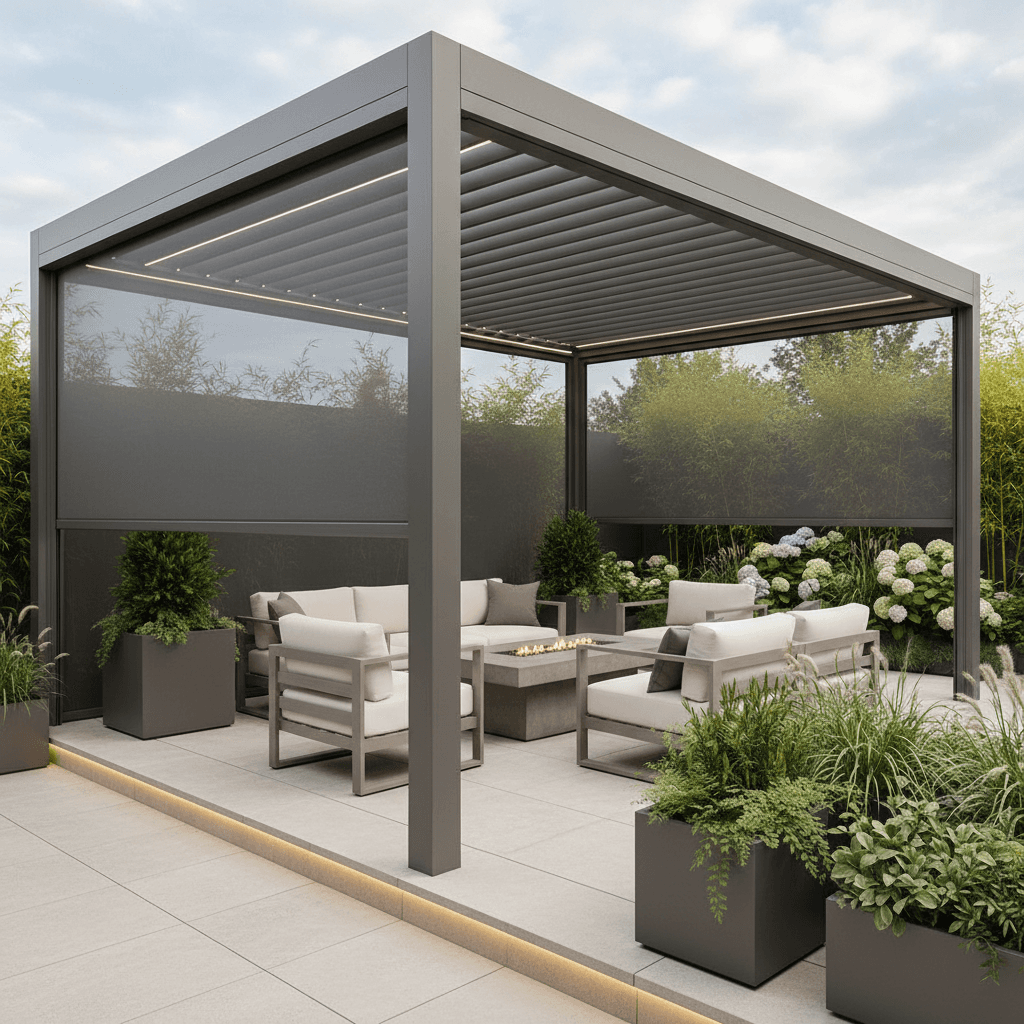
Retractable Patio Screens
Enjoy your outdoor living space year-round. Retractable patio screens keep insects out, block UV rays, and give you privacy without sacrificing your view. Open when you want the breeze, closed when you need protection.
What Are Retractable Patio Screens?
Retractable patio screens are roll-up or slide-out screen systems that mount to your patio, porch, pergola, or gazebo opening. When deployed, they create a screened enclosure that blocks insects, filters sunlight, and reduces wind. When retracted, they roll into a compact housing that is virtually invisible, preserving your open view.
Unlike permanent screen enclosures, retractable screens give you the flexibility to choose when you want protection and when you want a completely open space. They work on openings from 4 feet to over 25 feet wide, covering everything from a single doorway to an entire outdoor room.
Three Main Types
Manual Pull-Down
Spring-loaded or gravity-fed screens that you pull down by hand. Most affordable option, ideal for single openings under 12 feet wide.
Motorized
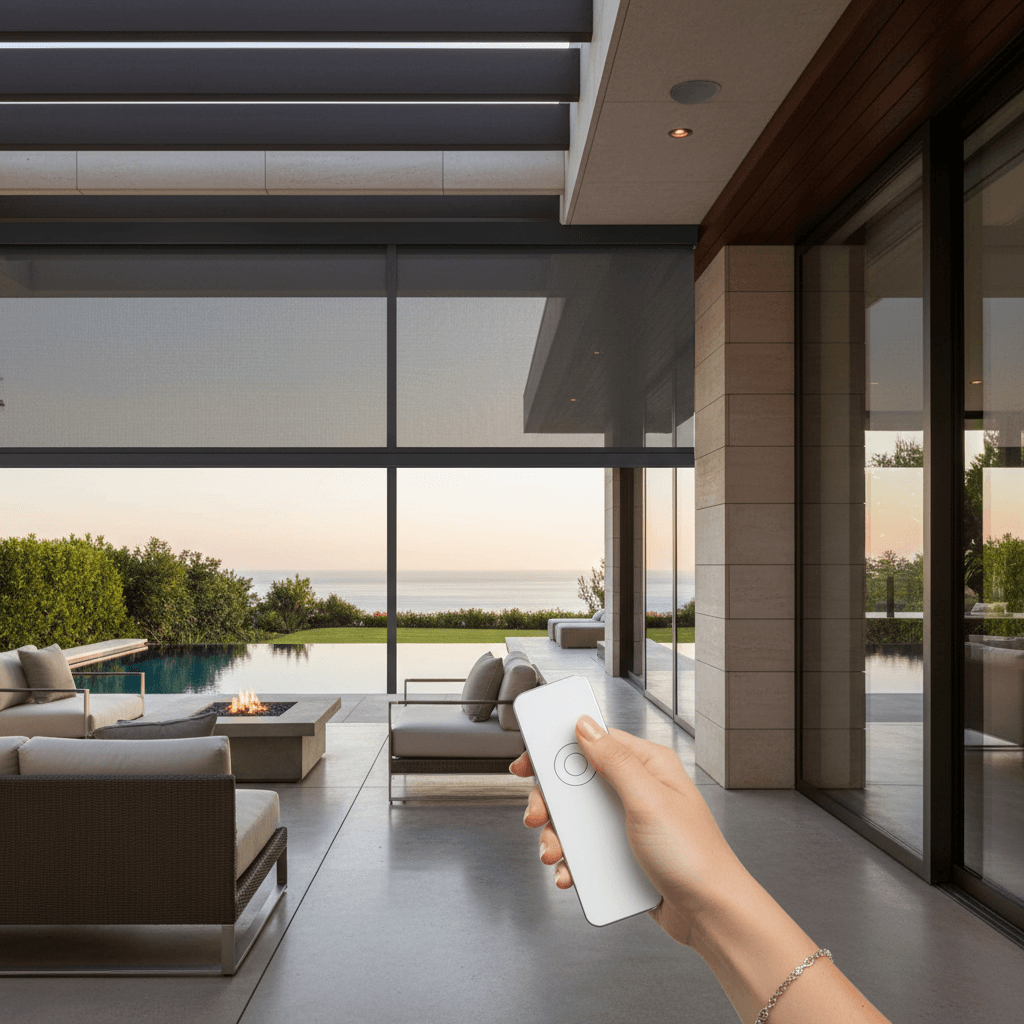
Electric motor-driven screens controlled by remote, wall switch, or smartphone app. Best for large openings and multi-panel setups where manual operation would be impractical.
Solar-Powered
Motorized screens with an integrated solar panel that charges the battery. No electrical wiring required, making them perfect for detached structures like pergolas and gazebos.
3,600+
monthly searches for retractable patio screens
Benefits That Make a Difference
Retractable patio screens deliver practical benefits that improve your daily outdoor experience and add lasting value to your home.
UV Protection
Solar mesh screens block up to 90% of harmful UV rays while still allowing air flow and visibility. This protects your skin, reduces fading on outdoor furniture, and keeps the patio surface cooler on hot days.
Insect Barrier
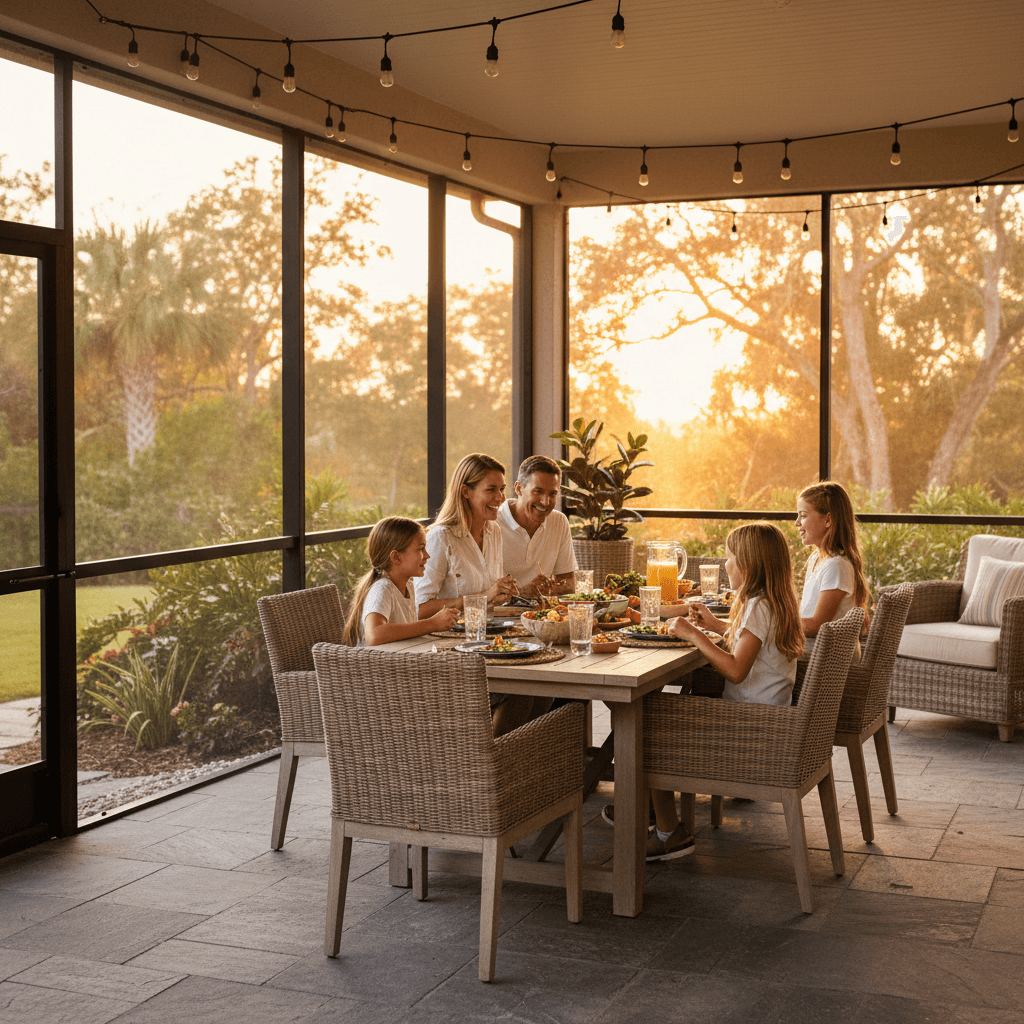
Fine mesh screens keep mosquitoes, flies, gnats, and other pests out of your outdoor space. Enjoy dinner on the patio without bug spray, citronella candles, or swatting. Most screens use 18x16 or 20x20 mesh tight enough to stop even the smallest insects.
Privacy on Demand
Solar or privacy-grade mesh creates a one-way visual barrier. People outside see a dark screen, but you maintain a clear view outward. Retract the screens when you want the open feel back. No permanent structure needed.
Energy Savings
Screens mounted over windows and glass doors reduce solar heat gain, lowering your cooling costs by up to 25% during summer months. They act as an exterior shade layer that stops heat before it reaches the glass, which is more effective than interior blinds or curtains.
Increased Home Value
A professionally installed retractable screen system adds usable square footage to your home. Screened outdoor rooms are consistently ranked among the top renovations for return on investment, with many homeowners recouping 70-80% of installation costs at resale.
Wind Reduction
Retractable screens reduce wind speed by 50-70%, turning a breezy patio into a comfortable space. Track-guided systems maintain tension even in moderate wind, so you can keep screens deployed during gusty afternoons without worrying about them flapping or detaching.
Types, Styles, and Materials
Choosing the right retractable screen depends on your opening size, desired level of protection, and how you plan to use the space. Here is a breakdown of the main configurations and materials.
Horizontal vs. Vertical Screens
Vertical (top-down) screens roll down from a housing mounted above the opening. They are the most common type and work well for porches, pergolas, and window openings.
Horizontal (side-to-side) screens slide along a top and bottom track, retracting into a housing on one or both sides. These are ideal for wide openings like bi-fold door entries or lanai spaces where a top-mount is not practical.
Single-Panel vs. Multi-Panel
Single-panel systems cover one opening with a single mesh panel. They work for spans up to about 16 feet wide (some motorized units reach 25 feet). For larger openings, multi-panel systems use two or more panels that meet in the center with a magnetic seal or overlap strip, covering spans of 30 feet or more.
Screen Mesh Materials
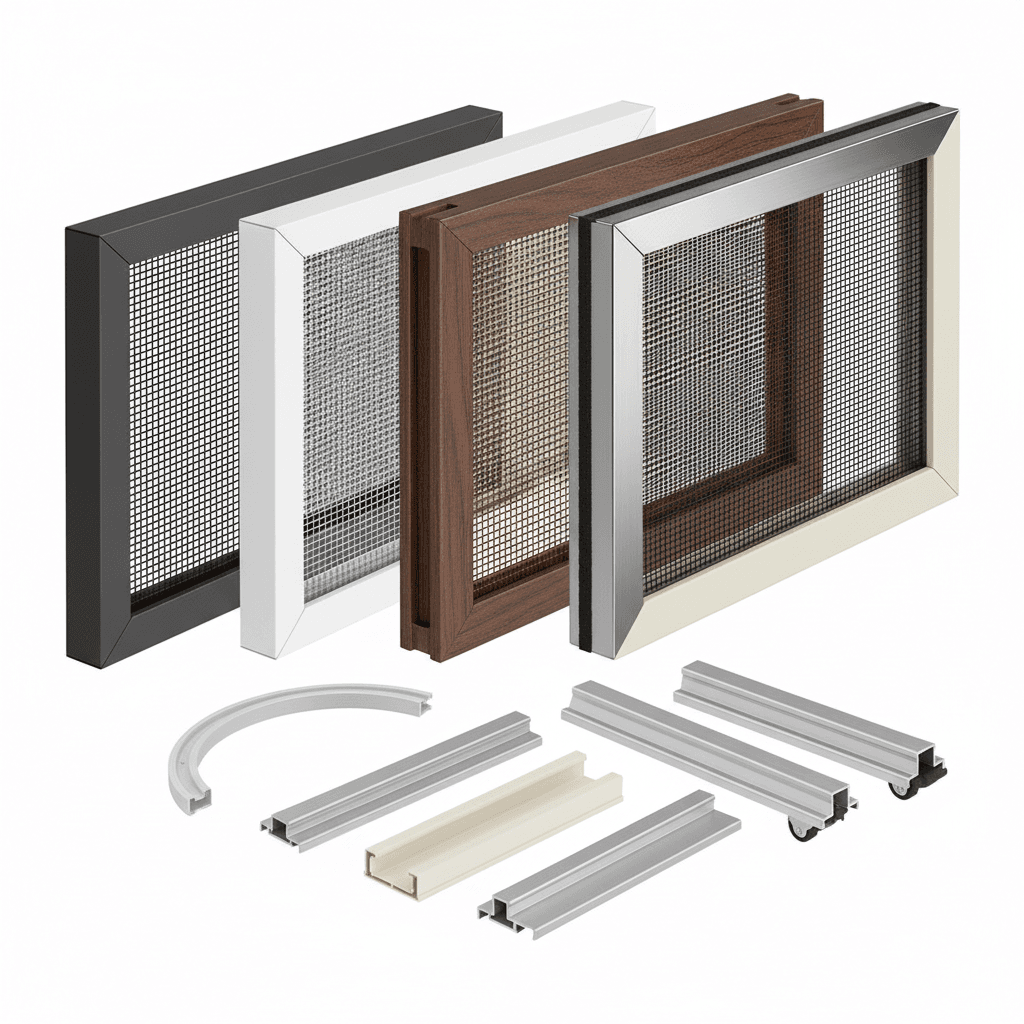
Fiberglass Mesh
The standard choice. Affordable, good visibility, and effective insect blocking. Available in charcoal (best visibility) and gray. Resists corrosion and does not crease permanently. Typical lifespan: 5 to 7 years before UV degradation becomes noticeable.
Polyester / PVC-Coated Mesh
Stronger and more tear-resistant than fiberglass. Better suited for pet owners and high-traffic areas. PVC coating adds weather resistance and extends the lifespan to 8 to 12 years. Slightly reduced visibility compared to fiberglass.
Solar / Sun-Control Mesh
Woven from vinyl-coated polyester designed to block 65-90% of UV rays and solar heat. Available in different openness factors (1%, 3%, 5%, 10%) that control the balance between shade and visibility. The tighter the weave, the more heat and glare it blocks. Premium option at roughly 2x the cost of standard fiberglass.
Quick Selection Guide
- 1.Small porch door (3-5 ft): Manual horizontal, fiberglass mesh
- 2.Pergola (8-16 ft): Motorized vertical, solar mesh for shade
- 3.Large lanai (16-30 ft): Motorized multi-panel, polyester mesh for durability
- 4.Detached gazebo: Solar-powered motorized, fiberglass or solar mesh
- 5.Pet-friendly areas: PVC-coated polyester mesh (tear-resistant)
Installation Guide
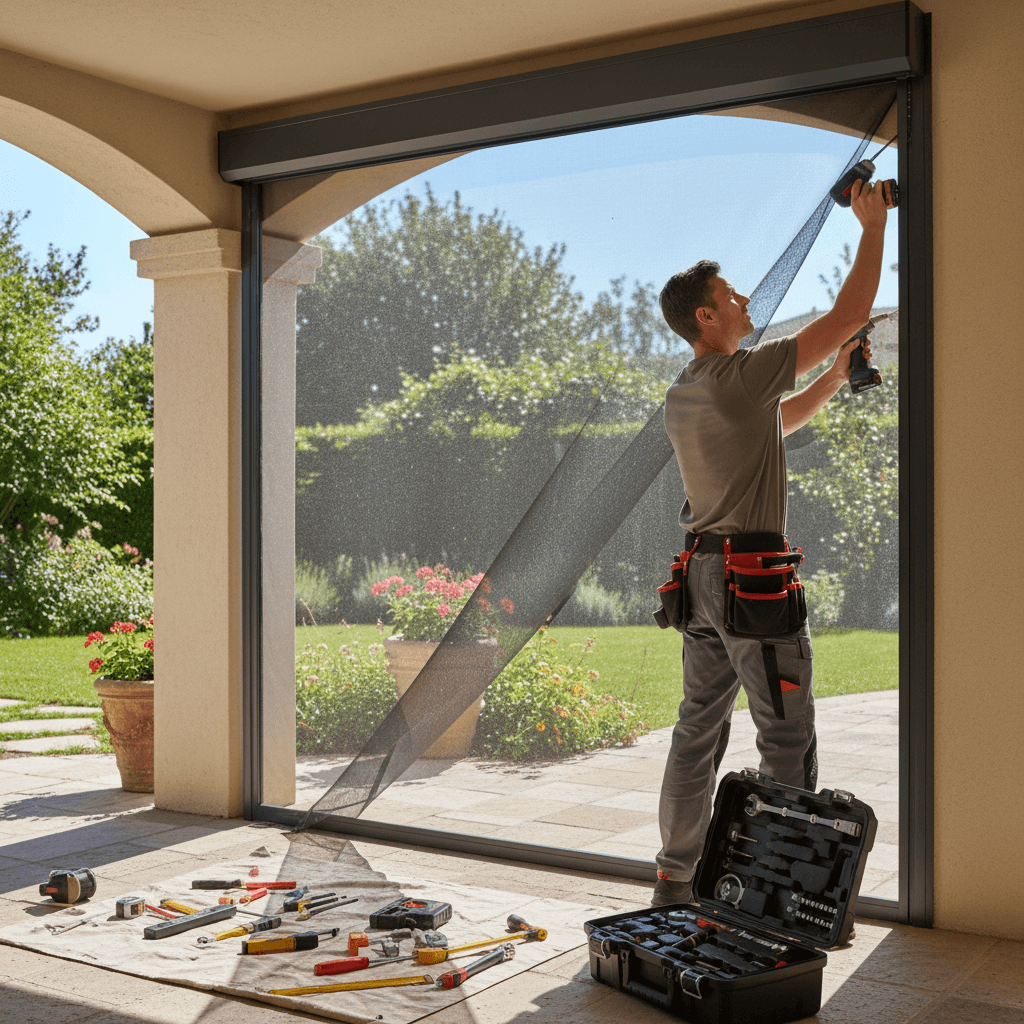
Whether you hire a professional or take the DIY route, here is what to expect during installation of a retractable patio screen system.
Professional Installation
A certified installer will measure your openings, recommend the right system and mesh type, and handle the mounting. Most single-screen installations take 2 to 4 hours. Multi-panel or motorized systems with wiring typically take a full day. Professional installation costs $200 to $600 per screen on top of the product price, but you get precise measurements, warranty-backed mounting, and electrical connections done to code.
DIY Installation
Many manual retractable screens are designed for homeowner installation with basic tools: a drill, level, tape measure, and a helper. The housing mounts to the header or ceiling above the opening, and side tracks attach to the jambs or posts. Most kits include all mounting hardware and step-by-step instructions. Expect 1 to 2 hours for a single screen if your opening is square and the mounting surface is solid.
Common Configurations
- Porch openings: Top-mounted housing with side channel tracks. Screens roll down between existing posts or columns.
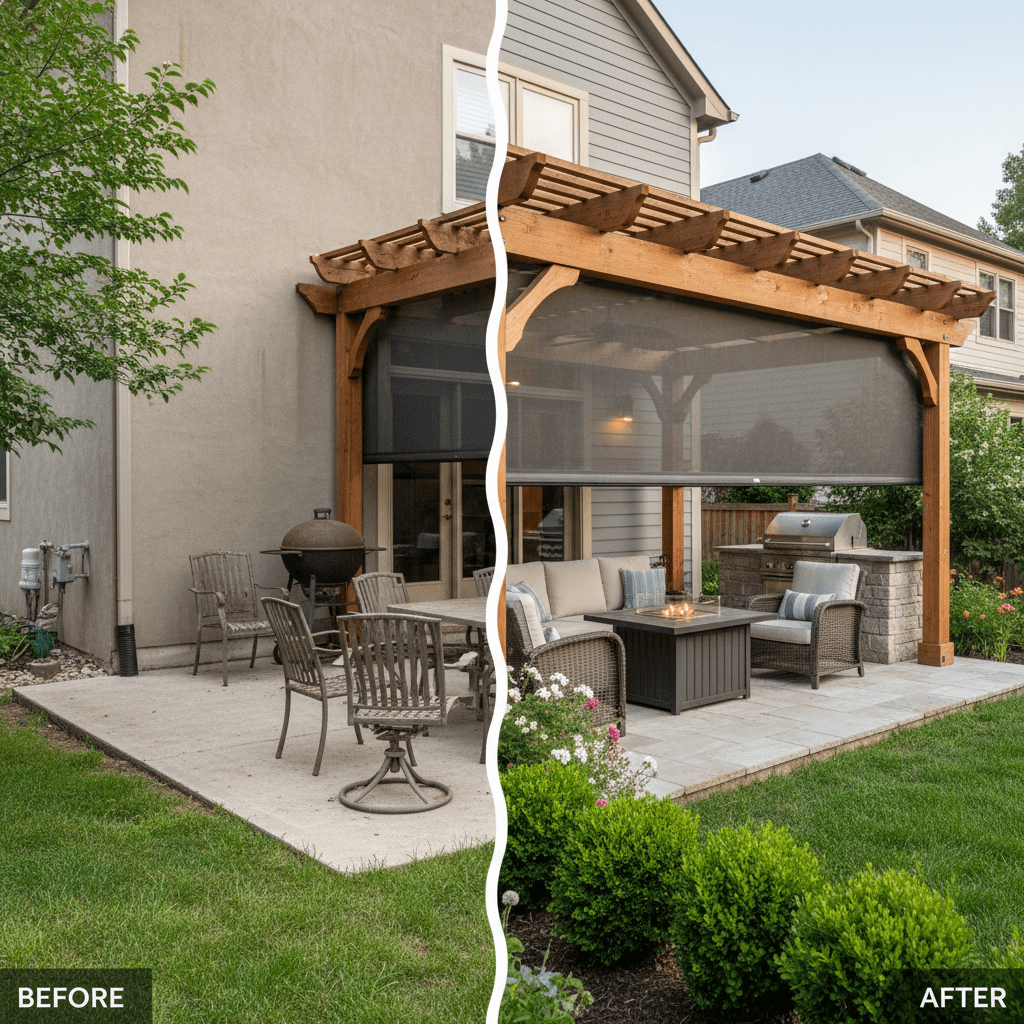
- Pergola / open roof: Vertical screens on each side, often 3 or 4 screens to enclose the entire structure. Motorized recommended for convenience.
- French or sliding doors: Horizontal retractable screens that slide into a housing on one side of the door frame. Single or double-panel options.
- Garage / workshop: Large vertical screens covering full garage door openings. Lets air in while keeping insects and debris out during projects.
Cost and Return on Investment
Retractable patio screen pricing varies based on size, operation type, and materials. Here are the typical ranges you can expect for a standard residential installation.
Manual Screens
$300 - $800
per opening
- Spring-loaded or gravity-fed operation
- Openings up to 12 feet wide
- DIY installation possible
- Standard fiberglass mesh included
Motorized Screens
$1,500 - $3,500
per opening
- Remote, wall switch, or app control
- Openings up to 25 feet wide
- Wind sensors and smart home integration
- 5-year motor warranty standard
Full Patio Enclosure
$4,000 - $12,000+
complete system
- 3 to 4 motorized screens
- Professional installation included
- Synchronized control for all screens
- Premium mesh and color-matched housing
Factors That Affect Price
Opening Size
Wider and taller openings require larger housings, longer tracks, and more mesh material. Openings over 16 feet typically need multi-panel systems or commercial-grade motors.
Mesh Material
Standard fiberglass is the most affordable. Solar mesh costs roughly 2x more. Pet-resistant polyester falls in between. The mesh choice affects both price and replacement cost down the road.
Operation Type
Manual systems cost less upfront but limit you to smaller openings. Motorized adds $800 to $1,500 per screen but provides convenience, smart home integration, and wind-sensing safety.
Energy Savings Payback
Solar mesh screens on south- and west-facing openings can reduce cooling costs by 15-25%. For a home spending $200/month on summer cooling, that translates to $300 to $600 in annual savings, meaning the screens often pay for themselves in 3 to 5 years.
Frequently Asked Questions
Answers to the most common questions about retractable patio screens, installation, cost, and maintenance.
How much do retractable patio screens cost?
Can retractable patio screens withstand wind?
How long do retractable patio screens last?
Are retractable patio screens worth the investment?
Can I install retractable screens myself?
What is the difference between retractable screens and fixed screen enclosures?
Do retractable patio screens work on large openings?
How do motorized retractable screens work?
How do I clean retractable patio screens?
Do retractable patio screens keep out bugs completely?
Request a Free Quote
Tell us about your project and we will connect you with retractable patio screen specialists in your area. Get personalized recommendations and competitive pricing for your specific setup.
Free, No-Obligation Quotes
Compare pricing from multiple installers in your area.
Quick Response
Most inquiries receive a response within 24 hours.
Nationwide Coverage
Serving homeowners across the United States.